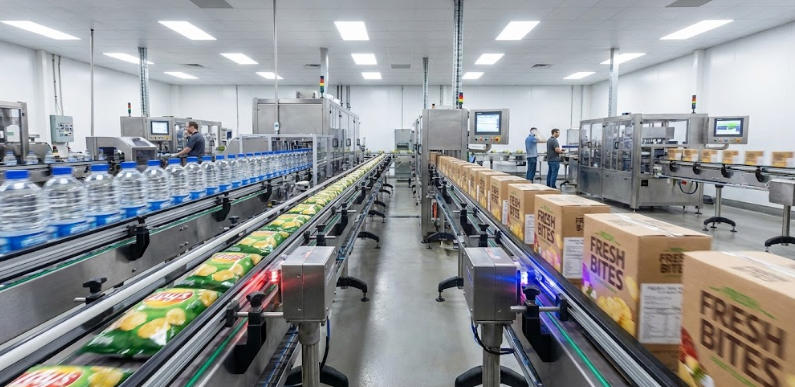
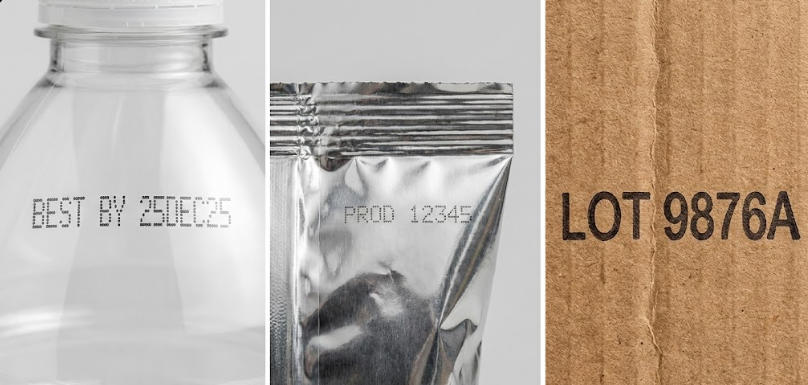
In the modern food facility, the coding station is a critical compliance point. Every package must carry clear, legible information—production dates, expiry dates, batch codes, and increasingly, 2D barcodes for supply chain traceability. These codes must withstand the rigors of the supply chain, including refrigeration, moisture, and abrasion, across diverse packaging formats like glass, PET, flexible films, and corrugated cases.
For decades, continuous inkjet (CIJ) printers were the default choice. However, food manufacturers are increasingly moving away from ink-based systems due to inherent limitations:
High Consumable Costs: The recurring expense of inks and solvents can be significant over a machine's lifecycle.
Maintenance & Downtime: Inkjet printers require regular printhead cleaning and filter changes. Unplanned downtime due to clogged nozzles directly impacts line efficiency (OEE).
Environmental & Safety Pressure: Reducing Volatile Organic Compounds (VOCs) and eliminating hazardous solvent storage is a priority for green manufacturing initiatives.
Laser marking systems solve these challenges by using a focused beam of light to create permanent codes without any consumables. They offer "install and forget" reliability for high-speed lines, ensuring that critical traceability data remains legible from the factory floor to the consumer's table.
Laser coding is a non-contact process that alters the packaging material's surface to create contrast. Depending on the substrate, the laser achieves this through:
Ablation: Removing a thin layer of ink or coating (e.g., on painted labels or cartons) to reveal the contrasting material underneath.
Foaming/Carbonization: Heating the plastic surface to create a raised, color-changing mark (common on PET bottles and rigid plastics).
Cold Marking: Using high-energy photons to break chemical bonds without significant heat, resulting in a smooth, high-contrast mark (ideal for thin films).
Selecting the correct laser wavelength is the single most important factor in successful food coding. The three main technologies are CO₂, UV, and Fiber lasers.
Food Packaging Laser Types Overview
| Laser Type | Best Food Packaging Use Cases | Key Benefits for Food Coding |
|---|---|---|
| CO₂ Laser | Paper cartons, glass bottles, PET bottles, inked labels. | High-speed coding; excellent contrast on paper and PET; most cost-effective solution for general packaging. |
| UV Laser | Thin flexible films, composite pouches, foils, HDPE/LDPE. | "Cold marking" prevents burn-through on thin films; high contrast on medical and food plastics; minimal heat affected zone. |
| Fiber Laser | Metal cans, aluminum lids, pouches with foil layers, stainless steel. | Permanent, etched codes on metals; withstands sterilization and retort processes; high precision for small text. |
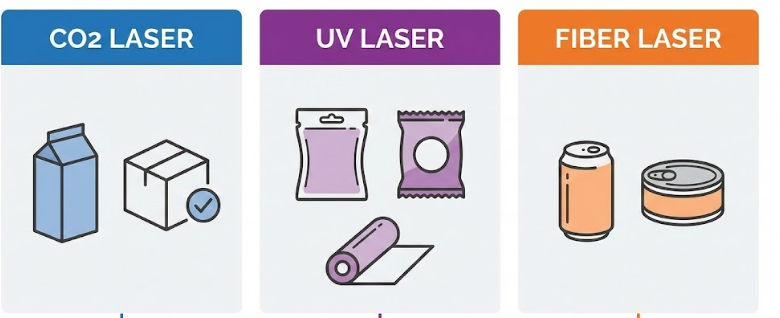
To ensure line efficiency and code integrity, the laser system must be matched to the specific packaging material.
Flexible packaging—such as flow wraps for snacks, frozen food bags, and stand-up pouches—presents unique challenges. The material is often thin and heat-sensitive. Standard thermal lasers can sometimes risk puncturing the film, compromising the package's barrier properties.
For these applications, UV Laser marking is the gold standard. Operating at a 355nm wavelength, UV Lasers utilize a "cold marking" process that discolors the film surface without generating excessive heat. This ensures a crisp, high-contrast code without damaging the film's structural integrity.
Recommendation: For high-speed lines running thin films, explore the Nano Mark UV Laser Series. It delivers precise coding that preserves food freshness and package safety.
Beverage lines typically run at high speeds (often exceeding 20,000 bottles per hour) and require codes that are visible against liquids of varying colors.
PET & Glass: CO₂ lasers are the industry workhorse here. On PET, they create a "foamed" white mark that is highly visible. On glass, they can etch a permanent code that won't rub off during condensation or refrigeration.
Recommendation: The Nano Mark CO₂ Laser Printer is engineered for these high-speed environments, offering stable beam quality that ensures legible dates even on moving bottles.
For canned foods, aluminum beverage cans, or foil-lidded trays, the code must survive high-temperature sterilization (retort) processes. Inkjet codes often require specialized, expensive color-change inks to survive this.
Metal Solutions: Fiber lasers are the ideal choice. They engrave directly into the metal surface, creating an indelible mark that is impervious to heat, steam, and chemical washdowns.
Recommendation: Manufacturers using metal packaging should consider the Fiber Laser Marking Machine, which provides deep, durable marks suitable for regulatory traceability on cans.
Secondary packaging, such as corrugated boxes and shelf-ready cartons, requires larger codes for logistics tracking.
Direct Marking: CO₂ lasers can ablating the "ink patch" on a carton to create a white-on-dark code.
Hybrid Approach: For applications requiring very large text or barcodes on porous cardboard, a Large Character Inkjet or high-resolution CIJ system might be paired with lasers.
Recommendation: For a versatile solution that handles both primary and secondary coding needs, Nano Mark offers a range of Inkjet Printing Machines that can complement your laser installation for a complete line solution.
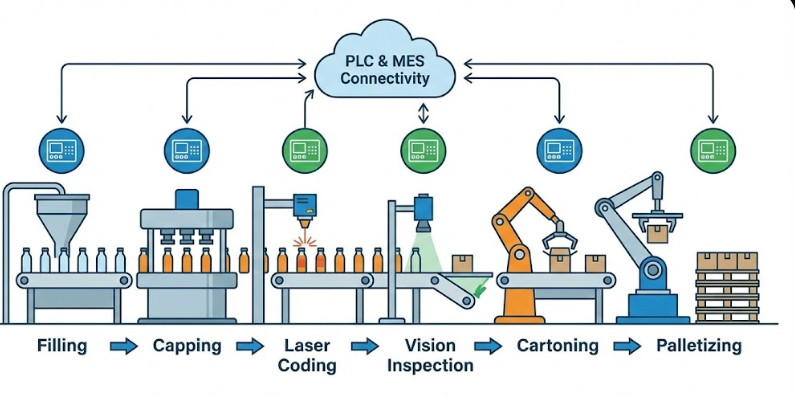
Buying a "laser" is different from installing a "solution." A successful deployment requires more than just the laser source. A complete ecosystem includes:
Mechanical Integration: Custom stands and beam shields that fit tight production spaces.
Vision Systems: Cameras to verify code presence and readability (OCR/OCV) immediately after marking, ensuring 100% quality control.
Fume Extraction: Efficient removal of particles and fumes generated during marking to maintain a food-safe environment.
Software Connectivity: Integration with MES/ERP systems to automate job selection and centralized data management.
Nano Mark is more than a equipment manufacturer; we are a partner in production efficiency. With over 30 years of experience, we provide end-to-end coding solutions tailored to the food industry.
Comprehensive Portfolio: Whether you need the precision of a UV Laser for delicate films or the robustness of a Fiber Laser for canning lines, we have the technology in-house.
Global Support: Our team assists from the initial sample testing—proving the code quality on your specific packaging—to final line integration.
Hybrid Capability: We understand that laser isn't always the only answer. That's why we also offer advanced CIJ Inkjet Printers, allowing us to recommend the unbiased, best-fit technology for your specific application.
Learn more about our company's history and commitment to quality at About Nano Mark.
Investing in laser coding is often a strategic decision driven by Total Cost of Ownership (TCO). While the initial capital expenditure for a laser system is typically higher than an inkjet printer, the operational savings are immediate:
Zero Consumables: No budget needed for inks, make-up fluids, or cartridges.
Reduced Maintenance: No printhead cleaning or fluid system flushes.
Sustainability: Laser marking eliminates solvent emissions, directly contributing to a factory's carbon footprint reduction and improving workplace safety.
Furthermore, regarding Compliance, laser codes are permanent. They cannot be easily altered or removed, providing a higher level of security against counterfeiting and ensuring compliance with retail and government traceability mandates.
Successful integration requires careful planning. Here is a checklist for engineers:
Space Assessment: Measure the available space on the conveyor. Laser heads are compact, but the beam delivery path needs clear access.
Vibration Control: Ensure the mounting point is isolated from heavy vibrations (e.g., capping machines) to maintain code clarity.
Safety Guarding: Class 4 lasers require proper shielding. Plan for an enclosure that protects operators while allowing safe product flow.
Signal Synchronization: The laser needs a reliable "product detect" signal (sensor) and speed data (encoder) from the conveyor to place the code accurately, especially on variable-speed lines.
The shift towards laser marking in the food industry is driven by the need for permanence, efficiency, and sustainability. By selecting the right laser technology—whether CO₂, UV, or Fiber—manufacturers can eliminate the headaches of traditional ink coding while ensuring every product carries a crisp, compliant, and traceable mark.
Whether you are upgrading a single line or designing a new facility, Nano Mark's diverse range of laser and inkjet solutions ensures you have the right tools for the job.
Ready to evaluate the best coding technology for your packaging? Contact us today to request a free sample marking on your product material and discover the difference a dedicated laser solution can make.
Contact: Jason
Phone: +8613337336942
E-mail: [email protected]
Add: Hangzhou City, Zhejiang Province, China