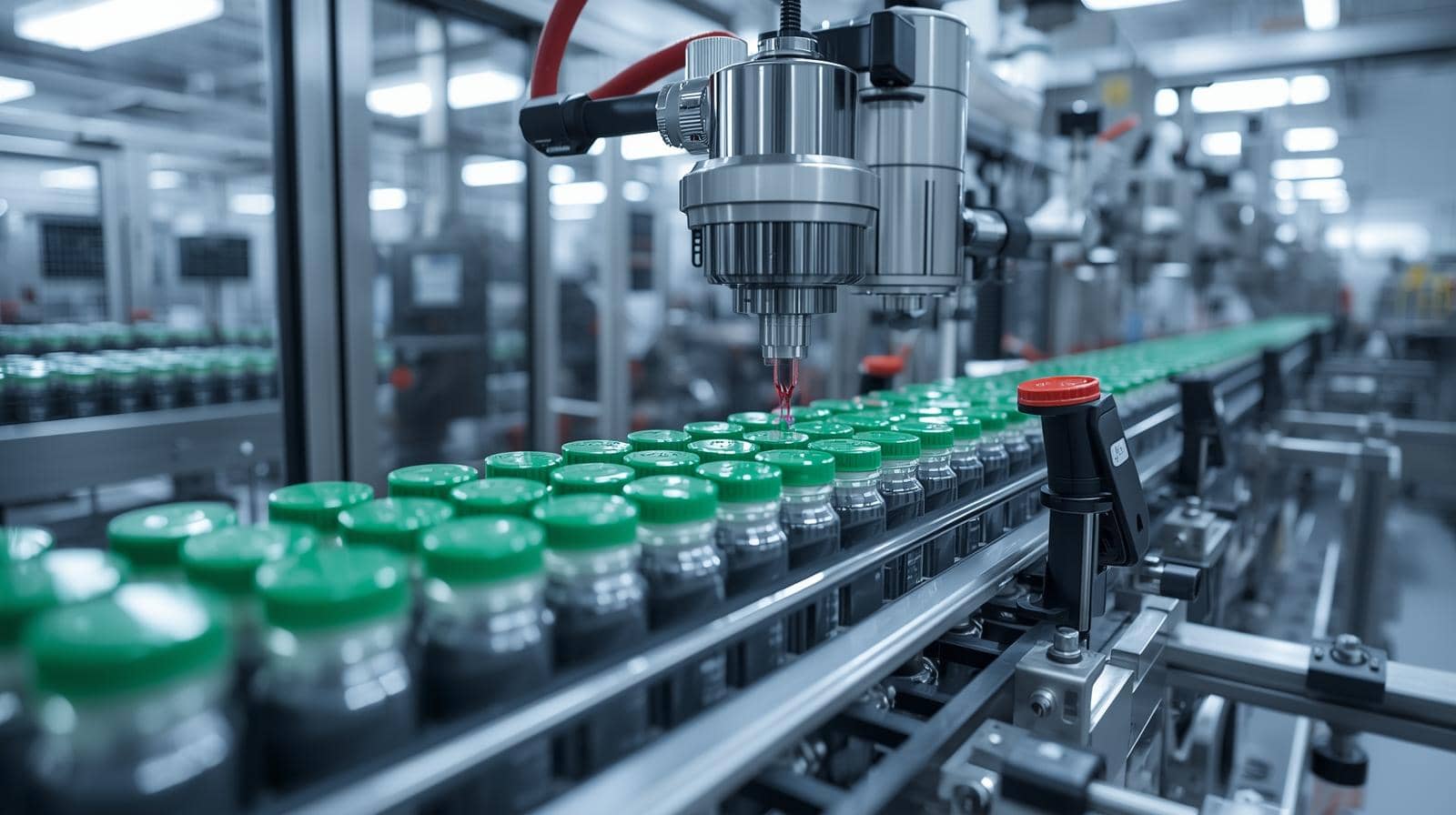
You know what keeps food safety managers up at night? It’s not just bacteria. It’s marks that disappear after sterilization.
When metal cans go through 121°C retort cycles, traditional labels and inkjet codes don’t just fade — they vanish. Batch numbers become unreadable. Production dates disappear. And suddenly, traceability becomes a serious risk.
Laser marking changed that.
But not every laser is built to survive retort conditions.
This article breaks down which laser marking options actually work for metal cans — and why some fail after sterilization.
Permanent marking doesn’t just mean “hard to remove.”
For canned food, it means the mark must survive:
High-temperature steam and pressure
Acidic or salty food contents
Condensation during cooling
Long-term storage and handling
Adhesive labels peel. Inkjet codes smear or fade when moisture hits them. After a full retort cycle, many traditional marks are simply gone.
Food regulations require readable batch codes throughout the entire product lifecycle. When a recall happens, manufacturers must still identify production dates and lot numbers clearly.
Laser marking solves this by permanently changing the surface of the can itself — no ink, no labels, no consumables that can fail during sterilization.
Not all lasers behave the same on metal. Choosing the wrong technology can lead to weak contrast, unreadable codes, or marks that degrade after retort.
Here’s how the main options compare.
Fiber lasers operate at a 1064 nm wavelength, which is highly absorbed by metals such as aluminum and stainless steel.
Instead of printing on the surface, fiber lasers permanently modify the metal through ablation or controlled thermal effects. The result is a high-contrast, durable mark that resists heat, moisture, and abrasion.
Why fiber lasers work so well for metal cans:
Strong contrast on bare aluminum and steel
Deep, permanent marks that survive retort
Excellent resistance to scratching and cleaning chemicals
Long laser source lifetime (often up to 100,000 hours)
High-speed marking suitable for modern canning lines
For beverage cans, food cans, and stainless steel containers, fiber lasers are usually the most reliable solution.
If you’re marking directly on metal, a fiber laser marking machine is typically the safest long-term choice.
CO₂ lasers work very differently. They operate at a much longer wavelength (10.6 μm) and are not easily absorbed by bare metal.
Instead of marking metal directly, CO₂ lasers remove surface coatings or printed layers to reveal contrast underneath.
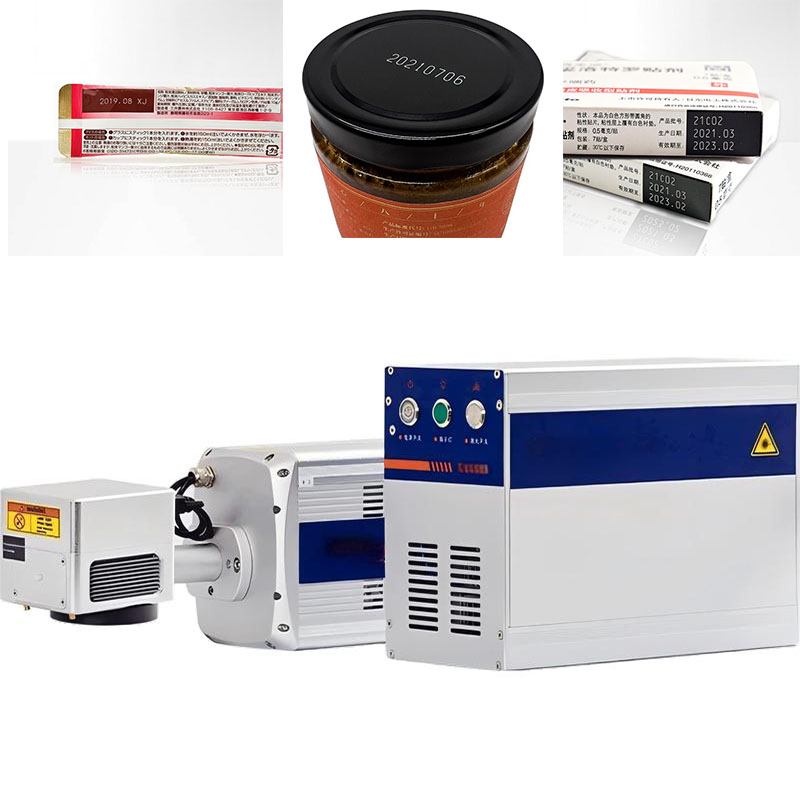
CO₂ lasers are well suited for:
Coated or painted metal cans
Printed steel surfaces
Applications where marking is done through a surface layer
However, on uncoated aluminum or stainless steel, CO₂ lasers usually produce weak or inconsistent marks unless special coatings are used.
For this reason, CO₂ laser printers are best for coated metal cans rather than bare metal applications.
Annealing (often called laser black marking) uses controlled laser heat to change the oxidation state of the metal without removing material.
The mark becomes a dark color formed by a chemical change in the surface — not by engraving.
Why annealed marks perform well in retort environments:
No material removal, so the surface remains intact
Extremely resistant to heat and chemicals
No flaking, peeling, or fading
This method is widely used in medical devices and pharmaceutical packaging. For premium food cans or applications requiring maximum durability, annealing offers exceptional performance when properly tuned.
Laser bonding uses marking additives that are fused into the metal surface using laser energy. The mark becomes chemically bonded to the substrate.
This technique offers extreme resistance to abrasion and corrosion, but it is less common in food can applications due to added process complexity.
Retort sterilization is one of the harshest environments a package will face.
Cans are exposed to:
121–135°C temperatures
High pressure
Steam and condensation
Rapid cooling cycles
Ink and adhesives fail because they sit on top of the surface.
Laser marks survive because they are part of the surface.
Industries such as aerospace, medical devices, and battery manufacturing rely on laser marking for exactly this reason — laser marks remain readable after extreme heat, chemical exposure, and mechanical stress.
When properly applied, laser marks easily withstand the conditions of food retort processing.
Fiber laser marking clearly stands out when durability matters.
Inkjet printing and labels may work for non-sterilized packaging, but they are not reliable for retort applications.
For manufacturers focused on long-term traceability, laser marking is not just an upgrade — it’s often a requirement.
Modern canning lines run at high speed, often hundreds of cans per minute.
Industrial laser systems integrate easily using:
Encoders for speed synchronization
Sensors for can detection
Standard communication protocols (Ethernet, RS232, RS485)
Fiber lasers, in particular, support high linear speeds without slowing production. Inline vision systems can verify code quality in real time, ensuring traceability before cans reach packaging or palletizing.
Getting durable results depends on correct setup, not just equipment choice.
Key best practices include:
Matching laser power to can thickness
Optimizing pulse frequency for contrast and depth
Balancing marking speed with readability
Ensuring clean surfaces before marking
Verifying code quality after retort testing
Testing on your actual can material is essential before full-scale production.
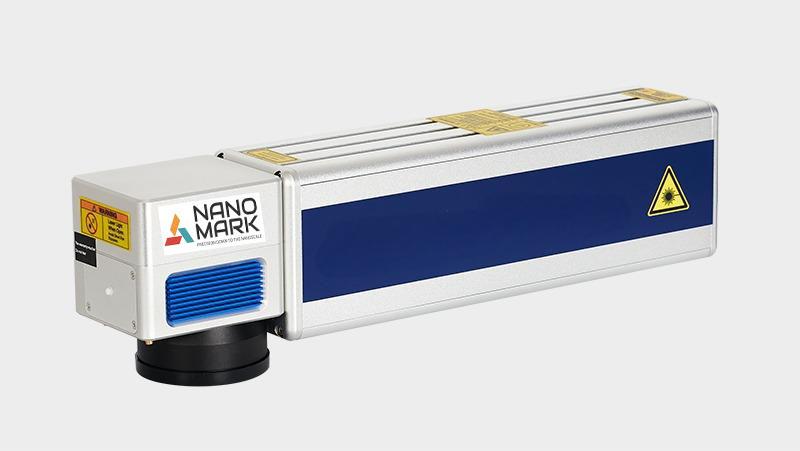
At Nano Mark, we design laser marking systems specifically for permanent, retort-resistant applications.
Our fiber laser systems are optimized for direct marking on aluminum and steel cans, delivering stable performance and long service life.
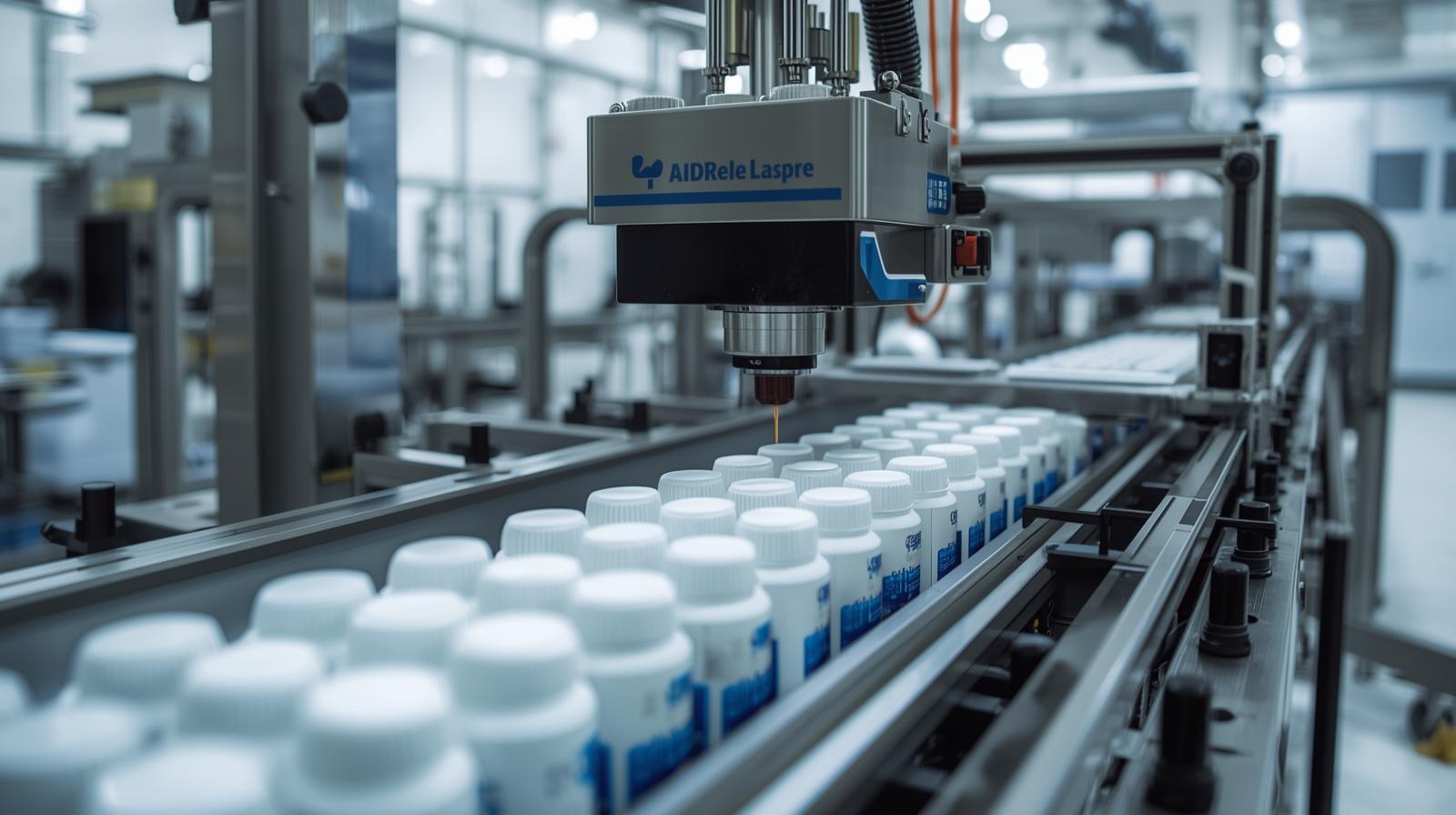 Our CO₂ laser systems provide cost-effective solutions for coated metal and hybrid packaging materials.
If you want to understand which laser fits your can type, line speed, and retort process, our laser marking system guide walks through real-world selection criteria.
Can laser marks survive retort processing on metal cans?
Yes. Laser marks permanently modify the metal surface and remain readable after high-temperature retort sterilization cycles.
Which laser type is best for metal can marking?
Fiber lasers are best for bare aluminum and steel cans. CO₂ lasers work well for coated or printed metal surfaces.
Does laser marking require ink or labels?
No. Laser marking is completely consumable-free and does not rely on ink, solvents, or adhesives.
Is laser marking food safe?
Yes. Laser marking is a non-contact process and introduces no foreign substances, making it suitable for food packaging.
How long do laser marks last after retort?
Properly applied laser marks last for the entire product lifecycle, including long-term storage and handling.
Contact: Jason
Phone: +8613337336942
E-mail: [email protected]
Add: Hangzhou City, Zhejiang Province, China