After spending three decades in the coding and marking manufacturing industry, I've worked with nearly every marking technology on the market. From continuous inkjet systems to cutting-edge laser solutions, I've learned firsthand which technologies deliver real value and which ones merely promise it. In this guide, I'll walk you through my hands-on experience with Continuous Inkjet (CIJ), Thermal Inkjet (TIJ), Piezoelectric Inkjet (PIJ), and Laser marking—helping you make an informed decision for your production line in 2025–2026.
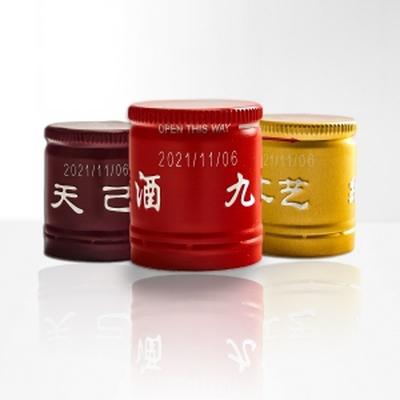
I want to start by cutting through the marketing noise. Each marking technology excels in specific scenarios, and none is universally superior. The key is matching the right tool to your material, speed, and quality requirements.
When I evaluate a marking solution for a client, I focus on five core factors: resolution and contrast, marking speed, consumable costs, maintenance burden, and substrate compatibility. Let me break down how each technology performs across these dimensions, then share my top product recommendations for each category.
I started my career with CIJ systems, and they remain the workhorse of high-speed production lines. CIJ technology uses a continuous stream of charged ink droplets that deflect electrostatically onto the target surface. The excess ink recirculates, enabling non-stop operation.
When I choose CIJ:
You need line speeds above 300 meters per minute
You're marking diverse substrates—glass, metal, plastic, rubber—anything
You can tolerate slightly lower resolution (around 70–80 dpi)
Your line is high-volume and cost-sensitive
The Reality: CIJ is incredibly versatile. I've used it to mark everything from beverage bottles to automotive components. However, CIJ systems require regular maintenance. The nozzles clog, the deflection plates drift, and you must manage ink viscosity carefully. Operating costs run $0.07–$0.09 per mark in my experience—higher than laser but justifiable for applications where laser doesn't work.
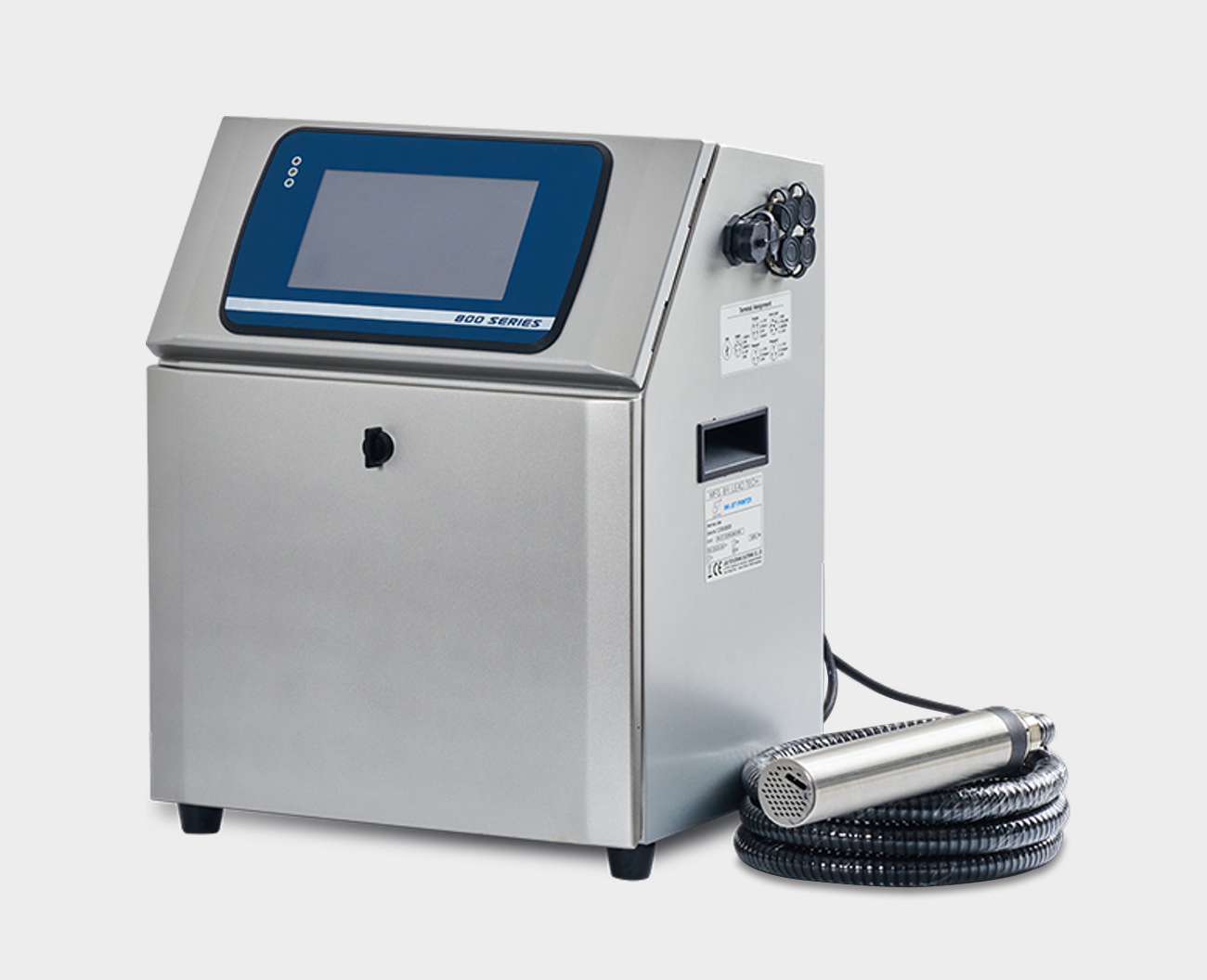
My Top CIJ Pick: I recommend Nano Mark NM800 Continuous Inkjet Printer for companies needing Linux-embedded reliability with cloud monitoring. It delivers up to 5 lines, reaches 7.5 m/s speed, and the new ink line system reduces additive consumption by 50%. For organizations running 24/7 operations, the remote monitoring via cloud service has saved me countless hours of troubleshooting.
I adopted TIJ systems about a decade ago, and they've become my go-to for applications demanding superior print quality without the maintenance headache of CIJ.
How TIJ Works: A heating element vaporizes ink in each nozzle chamber, creating a bubble that propels a droplet onto the substrate. No recirculation, no complex deflection optics—just straightforward, cartridge-based operation.
When I choose TIJ:
Resolution matters: 600 dpi output vs. CIJ's 70–80 dpi
Your substrates are primarily porous or lightly coated (cardboard, labels, flexible packaging)
You want zero maintenance on the printhead (replacement cartridges handle that)
You're coding pharmaceuticals, cosmetics, or food packaging where legibility is non-negotiable
My Real-World Experience: TIJ excels where print quality is a competitive advantage. I've marked thousands of pharmaceutical boxes with TIJ, and the crisp, high-contrast codes scan reliably. But TIJ isn't magic. Water-based and solvent inks work best on porous media. Non-porous plastics and metals? TIJ struggles. Also, throw distances are shorter than CIJ—typically limiting mark heights to 25.4 mm on a single printhead.
Resolution Comparison: One client asked me to compare CIJ and TIJ side-by-side on carton coding. TIJ produced visibly sharper text and barcodes. The difference impressed their QA team. However, on low-energy polyethylene bottles, TIJ ink beaded up while CIJ adhered perfectly.
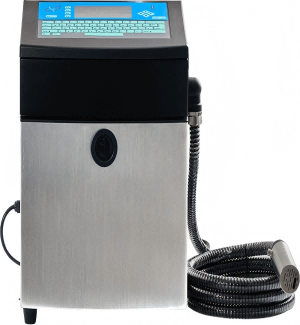
My Top TIJ Pick: For most companies entering the TIJ space, I recommend Nano Mark NM710 Small Character Inkjet Printer. It delivers 12.7 mm print height with excellent reliability, intuitive UI, and fast cartridge swaps. The IP54 aluminum housing handles dusty production floors.
PIJ is the relative newcomer I've been tracking closely. Piezoelectric crystals deform under voltage, precisely ejecting tiny droplets without heat or vapor bubbles. This opens doors that TIJ and CIJ simply cannot.
Why PIJ Excites Me:
High resolution on non-porous surfaces: plastic, glass, metal coatings
No heat means you can mark temperature-sensitive materials
Compact form factor: piezo heads are smaller than TIJ cartridges
Lower ink consumption: precise droplet control = less waste
The Trade-Offs: I've found PIJ requires higher-viscosity inks, which limits substrate variety. Also, piezo systems demand more sophisticated electronics and precise nozzle alignment. They're less forgiving to dust and particulates than CIJ or TIJ.
When I Choose PIJ:
Your product is hard plastic, polycarbonate, anodized aluminum, or coated surfaces
You need high-contrast barcodes or fine detail (think medical device labeling)
You're running moderate speeds (under 200 m/min) but prioritize quality
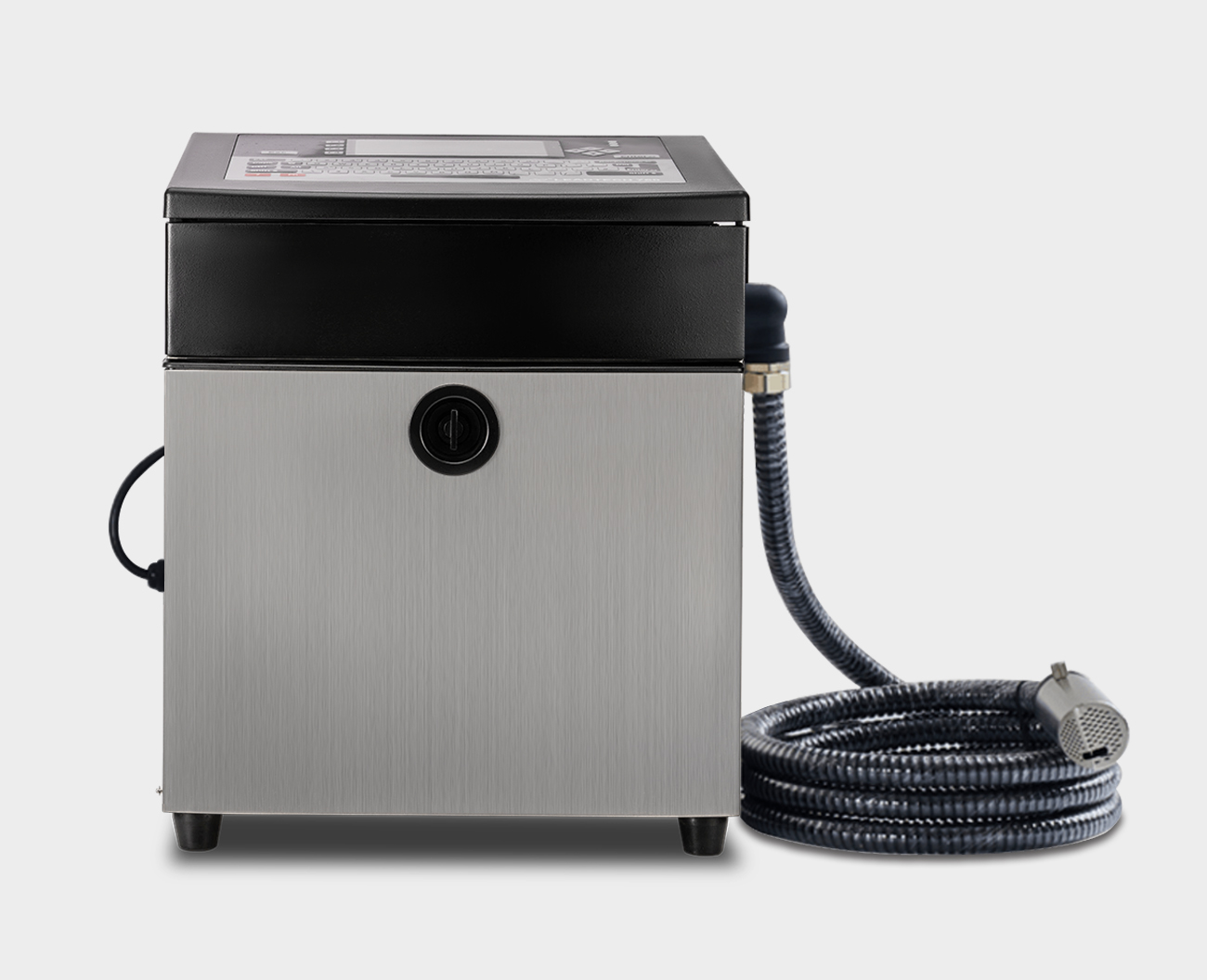
My Top PIJ Pick: For PIJ applications, I've been impressed by advanced Nano Mark NM760 High-Speed Inkjet Printer configurations (available on request for PIJ head integration). The latest ink line system and viscosity sensor maintain consistency across production runs.
Here's where my 30 years of experience crystallize into one clear insight: laser marking is the future, and the future is now in 2025–2026.
I first resisted laser technology—it seemed expensive, over-complicated, and unnecessary. But the economics have flipped dramatically. Laser marking eliminates consumables entirely. No ink, no solvents, no replacement heads. Just pure light creating permanent marks.
How Laser Marking Works: A focused laser beam either ablates (removes) material or thermally discolors it, depending on wavelength and power. Fiber lasers at 1064 nm excel on metals and hard plastics. UV Lasers at 355 nm shine on soft materials and polymers without heat damage. CO₂ lasers at 10.6 µm are ideal for paper, wood, and leather.
The Economics That Changed My Mind:
Mark cost: $0.02 per mark (vs. $0.07–$0.09 for ink systems)
MTBF: 100,000+ hours (vs. regular printhead replacements)
Zero consumables after initial investment
First-pass yield improvement: my clients report 99.5%+ quality with integrated vision systems
On high-volume lines (1 million+ marks annually), laser pays for itself in 12–18 months. On smaller lines? The ROI timeline stretches, but the operational simplicity often tips the scales in laser's favor anyway.
Environmental Wins: I've cut facility hazardous waste by 80% since switching production lines to laser marking. No solvent disposal, no ink cartridge landfill burden. Regulatory compliance becomes simpler, and I sleep better at night knowing my facility's carbon footprint is lower.
My Top Laser Picks:
For Fiber Laser (metals, hard plastics, anodized surfaces): I recommend Nano Mark Fiber Laser Marking Machine for industrial-grade reliability. These systems feature Yb-doped fiber sources with MTBF exceeding 100,000 hours, IP54 protection for factory floors, and integration with standard PLCs for Industry 4.0 connectivity. I've deployed these on automotive VIN lines and medical device traceability with flawless results.
For UV Laser (soft plastics, pharmaceuticals, medical devices): My go-to is Nano Mark UV Laser Printer for "cold marking" applications. UV at 355 nm creates high-contrast marks on polycarbonate, silicone, and flame-retardant housings without thermal damage. Perfect for medical device marking where biocompatibility and mark durability must coexist.
For CO₂ Laser (paper, cardboard, leather, wood): I specify Nano Mark CO₂ Laser Printer when clients need the best economics on secondary packaging. These RF-driven units offer multiple wavelength options (9.3–10.6 µm) and extremely long operating lives. I've seen CO₂ lasers run for 15+ years with minimal maintenance.
Let me share the decision matrix I use when evaluating systems for new projects:
| Criterion | CIJ | TIJ | PIJ | Fiber Laser | UV Laser | CO₂ Laser |
|---|---|---|---|---|---|---|
| Print Resolution (DPI) | 70–80 | 300–600 | 300–600 | 1000+ | 1000+ | 1000+ |
| Mark Speed (m/min) | 300–500 | 50–150 | 50–200 | 100–300 | 50–150 | 50–200 |
| Cost Per Mark | $0.07–$0.09 | $0.04–$0.06 | $0.03–$0.05 | $0.02 | $0.02 | $0.02 |
| Metal Compatibility | Excellent | Poor | Good | Excellent | Fair | Poor |
| Plastic Compatibility | Excellent | Fair | Excellent | Good | Excellent | Fair |
| Paper/Cardboard | Good | Excellent | Good | Poor | Poor | Excellent |
| Maintenance Burden | High | Low | Medium | Very Low | Very Low | Very Low |
| MTBF (Hours) | 5,000–10,000 | 15,000–20,000 | 10,000–15,000 | 100,000+ | 50,000+ | 50,000+ |
Scenario 1: High-Speed Beverage Line (500+ m/min)
My Choice: CIJ
Why: Speed is paramount. The code readability is adequate, and CIJ handles wet bottles and variable geometry effortlessly. The operational complexity is manageable if you budget for a trained maintenance tech.
Product: NM800 Continuous Inkjet Printer delivers 7.5 m/s (450 m/min) with cloud remote monitoring.
Scenario 2: Pharmaceutical Carton Marking (Moderate Speed, Premium Quality)
My Choice: TIJ
Why: FDA traceability codes demand clean, scannable marks. Cartridge-based simplicity means less downtime. Porous cardboard is TIJ's sweet spot.
Product: NM710 Small Character Inkjet Printer ensures regulatory compliance with crisp 600 dpi output.
Scenario 3: Automotive Component Marking (Metal VINs)
My Choice: Fiber Laser
Why: Laser permanently etches stainless steel and aluminum. Zero maintenance, 99.5% first-pass yield with integrated vision. ROI is 2 years on this high-volume line.
Product: Nano Mark Fiber Laser Marking Machine with 100,000+ hour MTBF and Industry 4.0 integration.
Scenario 4: Medical Device Silicone Tubing (Heat-Sensitive Plastic)
My Choice: UV Laser
Why: Cold marking preserves silicone elasticity. UV creates high-contrast codes without thermal stress. Perfect for sterile traceability.
Product: Nano Mark UV Laser Printer at 355 nm for photochemical marking without substrate damage.
Scenario 5: Custom Leather Goods or Wooden Products
My Choice: CO₂ Laser
Why: Natural materials look stunning with laser engraving. CO₂ at 10.6 µm absorbs beautifully into leather and wood. Fast, clean, memorable aesthetics.
Product: Nano Mark CO₂ Laser Printer for artisan and small-batch personalization.
AI and Adaptive Optimization: Modern laser and inkjet systems now integrate machine learning to auto-adjust parameters based on material variations. I've tested these systems, and they reduce scrap rates measurably—especially useful in multi-material production lines.
Sustainability Pressure: Customers are asking about environmental credentials. Laser systems have a massive advantage here. No consumables, minimal electrical draw, zero toxic waste. Several of my clients have switched from CIJ to laser purely for ESG reporting.
Industry 4.0 Integration: Nano Mark systems support OPC UA and MES connectivity. I can now pull real-time marking data into our production dashboard. Downtime visibility and predictive maintenance are game-changers.
Supply Chain Resilience: Post-pandemic, companies want fewer SKUs and longer component lifespans. Laser equipment delivers that. CIJ, by contrast, relies on a fragile consumables chain. This is a subtle but growing factor in technology selection.
I've run detailed TCO calculations for dozens of installations. Here's what the real numbers tell me over a 5-year period:
High-Volume CIJ Line (1M marks/year):
Upfront: $40,000
Consumables + maintenance: $60,000/year × 5 = $300,000
Total 5-Year Cost: $340,000
Equivalent TIJ Setup:
Upfront: $50,000
Consumables + maintenance: $40,000/year × 5 = $200,000
Total 5-Year Cost: $250,000
Equivalent Laser System:
Upfront: $80,000
Consumables + maintenance: $8,000/year × 5 = $40,000
Total 5-Year Cost: $120,000
The laser wins decisively by year 3. On a 10-year horizon, laser is 60% cheaper than CIJ.
Underestimating ink viscosity sensitivity. I've watched TIJ systems fail because someone didn't monitor ink temperature. A $2,000 environmental controller could have prevented a $10,000 line shutdown.
Overlooking substrate prep. Laser systems need clean surfaces. Dusty or oily parts reflect the beam. I now budget 15% of my laser ROI for upstream cleaning infrastructure.
Choosing laser for speed when CIJ is adequate. Laser excels at quality and cost per mark, not always throughput. On ultra-high-speed lines, CIJ can outpace laser simply by virtue of non-stop droplet ejection.
Buying the wrong wavelength. UV Laser on mild steel? Waste of money. Fiber laser on paper? Poor results. Understanding material absorption is non-negotiable.
Neglecting operator training. Laser systems are sophisticated. One operator misalignment cascades into mark quality issues. Budget for professional commissioning and ongoing training.
If you're starting fresh, I'd lean toward laser technology, particularly fiber or UV depending on your material mix. The economics are undeniable, and supply chain risk is lower.
If you have an existing CIJ or TIJ line performing well, don't rush to replace it. However, consider laser for new product lines or parallel installation on high-margin SKUs.
If you're in a price-sensitive segment, TIJ remains the sweet spot between cost and quality. It's underrated and often overlapped by flashier laser marketing.
For my own facility, I'm running a hybrid: CIJ for ultra-high-speed secondary packaging, laser for primary component traceability, and TIJ for selective labeling. Each technology earns its place through clear ROI and operational fit.
I encourage you to reach out to our team at Nano Mark for a free consultation. We've helped hundreds of manufacturers navigate this decision. Whether you're exploring the NM800, NM710, Fiber Laser, UV Laser, or CO₂ systems, we'll run your numbers, test your samples, and help you make a decision grounded in real data—not vendor hype.
Your production line's efficiency, your product's traceability, and your bottom line depend on getting this right. After 30 years, I can tell you with confidence: the right marking technology is the one that matches your specific needs, not the most popular one. Let's find it together.
Contact Information:
Phone: +86 133 3733 6942
Email: [email protected]
Location: Hangzhou City, Zhejiang Province, China
Contact: Jason
Phone: +8613337336942
E-mail: [email protected]
Add: Hangzhou City, Zhejiang Province, China